 Quintessence of Dental Technology 2021/2022, Volume 44
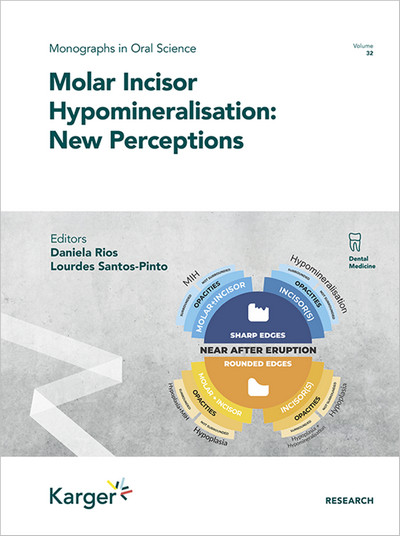 Molar Incisor Hypomineralisation: New Perceptions
 Endodontics Review: A Study Guide
 Challenging Nature: Wax-up Techniques in Aesthetics and Functional Occlusion
 Complications in Endodontic Surgery: Complications in Endodontic Surgery
 Tobacco and Your Oral Health
 The Journal of the American Dental Association (JADA); Full Archive (2000 to 2025)
 Medical Emergencies in Dental Practice
 Pitt Ford’s Problem-Based Learning in Endodontology
 Bell’s Oral and Facial Pain, 7th Edition
 Diploma in Dental Nursing, Level 3. Third Edition
 Apical Periodontitis in Root-Filled Teeth
 Adhesion in Pharmaceutical, Biomedical and Dental Fields

Description
This book provides a comprehensive introduction to physiologic anchorage control, explains the implications for clinical practice, and presents an anchorage technique applicable for the treatment of different malocclusions. The concept of physiologic anchorage control is derived from observations of upper molar movement during growth in adolescence, including in the absence of orthodontic treatment, which indicate that molar forward displacement comprises two components: the first due to biologic force or physiologic anchorage loss and the second due to orthodontic force or mechanical anchorage loss. All previous anchorage methods have been based on the assumption that molar anchorage loss is to be attributed solely to the mechanical force used to retract anterior teeth, and the new concept represents a paradigm shift of clinical significance. This book explores the pattern of upper molar growth in depth, highlights the physiologic significance of the curve of Spee, and analyzes the biomechanics of physiologic anchorage control. An anchorage control system that fully takes into account the latest conceptual insights is described and its clinical use and utility, examined.
e-Book ISBN: 9783319483337
| Author(s): Tian Min Xu |
|
English | 2017 | ISBN: 9783319483313 | 267 pages | PDF | 25 MB |